
Feeling stuffy, tired, and running to the bathroom at the same time is more common than most people realize. Many people search for answers when they
Feeling stuffy, tired, and running to the bathroom at the same time is more common than most people realize. Many people search for answers when they notice diarrhea and cold symptoms showing up together, wondering if it’s just bad luck or an actual illness. The truth is, several viruses can attack your gut and your respiratory system at once. This article breaks down which viruses are responsible, why this happens, and what you can do to feel better faster while protecting the people around you.
Understanding Diarrhea and Cold Symptoms Together

A runny nose paired with stomach trouble can feel confusing at first. Most people assume colds only affect the nose and throat. However, certain viruses are built to spread through multiple parts of the body. This is why diarrhea and cold symptoms sometimes appear during the same illness. Understanding this connection helps you recognize what your body is fighting. It also helps you decide whether home care is enough or if a doctor’s visit makes sense.
Common Viruses That Cause Diarrhea and Cold Symptoms
Not every cold-like illness stays in your chest or nose. Some viruses are designed to infect the intestines and the respiratory tract simultaneously. This dual attack often confuses people because typical colds rarely upset digestion. Knowing which viruses behave this way makes it easier to understand your symptoms and take the right steps toward recovery. Below are the most researched culprits behind combined stomach and respiratory illness.
Adenovirus Infection
- Adenovirus is a leading cause of mixed respiratory and stomach illness in children and adults.
- This infection spreads through coughing, sneezing, and contaminated surfaces.
- Symptoms often include sore throat, congestion, fever, and watery stools.
- Most healthy people recover within one to two weeks without medication.
- Handwashing significantly reduces the spread of this virus in households and schools.
Norovirus Infection
- Norovirus is famous for causing sudden vomiting and diarrhea outbreaks.
- Some strains also trigger mild congestion, headache, and body aches.
- It spreads rapidly on cruise ships, schools, and nursing homes.
- Dehydration is the biggest risk, especially in young children and older adults.
- Symptoms typically last one to three days but feel intense.
Rotavirus Infection
- Rotavirus mainly affects infants and young children worldwide.
- It causes severe watery diarrhea, vomiting, and sometimes mild respiratory signs.
- Vaccination has significantly reduced rotavirus cases in the United States.
- Fluid loss can become dangerous quickly in small children.
- Good hygiene and vaccination remain the strongest prevention tools available.
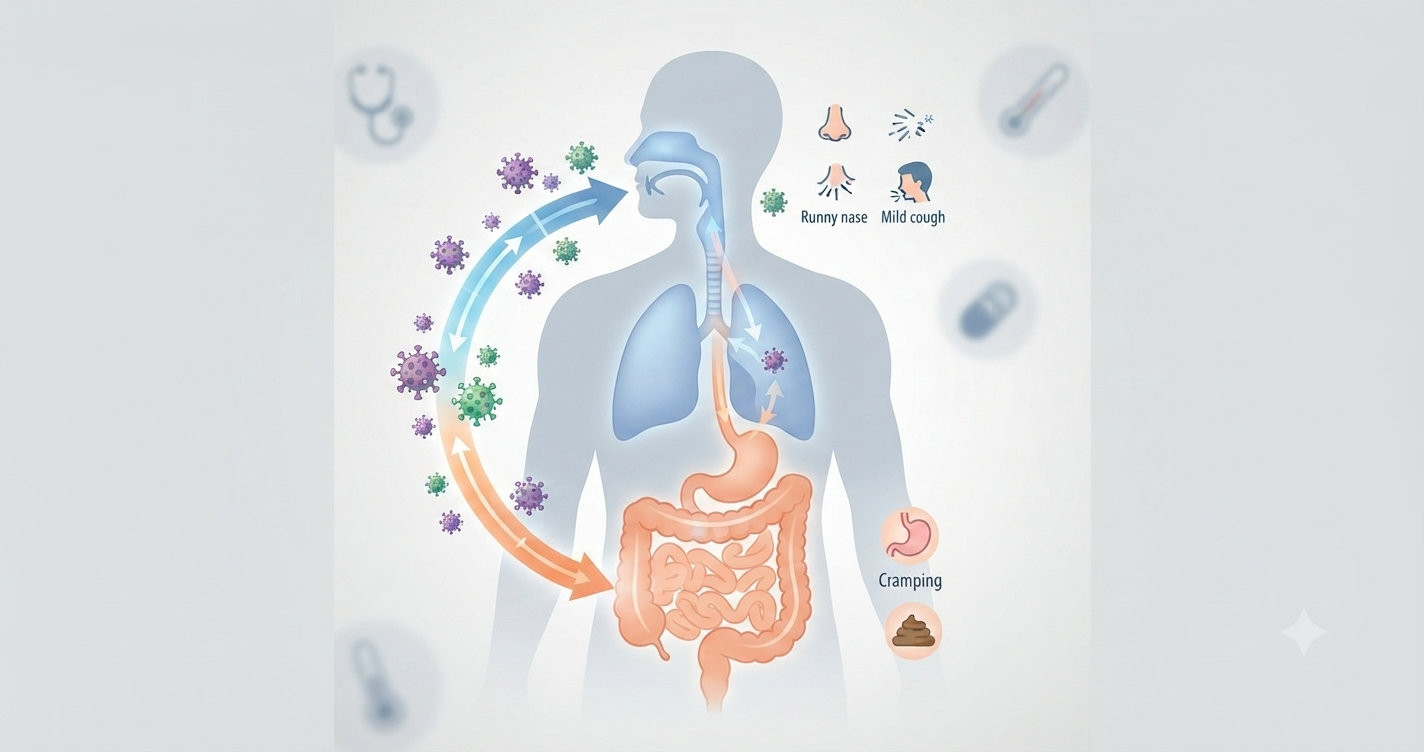
Viruses enter the body through the mouth, nose, or eyes. Some strains attach easily to cells lining the respiratory tract and the intestines. Because both areas share similar cell receptors, a single virus can infect them together. This explains why diarrhea and cold symptoms often appear within the same short window. Researchers have studied this pattern for decades, especially in adenovirus and norovirus cases. Your immune system then responds to both infection sites, which is why fatigue and fever often follow shortly after digestive troubles begin.
Key Symptoms to Recognize
Recognizing a combined viral infection early can prevent complications. Many people notice congestion, sneezing, or a sore throat first. Stomach symptoms like cramping, loose stools, or nausea often follow within a day or two. Fever, headache, and body aches are also common companions. Children may seem unusually tired or refuse food. Adults sometimes mistake early symptoms for food poisoning. Paying attention to the full pattern, rather than a single symptom, gives a clearer picture of what your body is actually dealing with.
Diagnosis and When Testing Helps
Doctors usually diagnose these infections based on symptoms and recent exposure history. Lab testing isn’t always necessary for mild cases. However, testing becomes useful when symptoms are severe, prolonged, or affecting vulnerable groups like infants or elderly patients. Stool samples can confirm norovirus or rotavirus, while throat swabs may identify adenovirus. Doctors may also order blood tests to check for dehydration or other complications. Getting an accurate diagnosis helps guide treatment decisions and prevents unnecessary antibiotic use, since these illnesses are viral, not bacterial.
Treatment and Home Care for Diarrhea and Cold Viruses

There’s no specific cure for most viral infections causing diarrhea and cold symptoms. Resting, drinking fluids, and eating light meals support natural recovery. Over-the-counter medications can ease fever, congestion, or body aches. Electrolyte solutions help replace lost fluids, especially in children. Antibiotics won’t help since viruses cause these illnesses, not bacteria. Most healthy adults recover within a week, though fatigue can linger a few extra days. Severe or worsening symptoms always deserve medical attention.
Prevention Tips for Staying Healthy
Preventing viral spread starts with simple daily habits. Washing hands frequently, especially after using the bathroom, makes a major difference. Avoiding close contact with sick individuals reduces exposure risk significantly. Disinfecting shared surfaces like doorknobs and countertops also helps. Staying up to date on vaccines, including rotavirus vaccination for infants, lowers illness rates. Eating well, sleeping enough, and managing stress support a stronger immune response overall. These small, consistent habits meaningfully reduce your chances of catching diarrhea and cold symptoms during peak seasons.
How to Manage Diarrhea and Cold Symptoms
Dealing with a virus that affects both your gut and your respiratory system can feel overwhelming, but most cases resolve with rest and proper fluids. Knowing the likely culprits, from adenovirus to norovirus and rotavirus, helps you respond calmly instead of panicking. Watching for warning signs like severe dehydration or high fever ensures you seek help when truly needed. With good hygiene and early attention to symptoms, most people bounce back quickly and avoid spreading illness to family members or coworkers.
Frequently Asked Questions
What virus causes both diarrhea and cold symptoms?
Adenovirus, norovirus, and rotavirus are the most common viruses linked to combined stomach and respiratory illness, especially in children and close-contact settings like schools.
Why do some colds also cause stomach problems?
Certain viruses can infect cells in both the respiratory tract and intestines, triggering congestion alongside diarrhea, cramping, or nausea within the same illness episode.
Where are these viruses most commonly spread?
Schools, daycare centers, nursing homes, and households with close contact are common places where these viruses spread quickly through surfaces or airborne droplets.
How long do diarrhea and cold symptoms usually last?
Most cases resolve within three to seven days, though fatigue and mild digestive upset can linger a bit longer in some individuals.
How can I tell if it’s a virus or food poisoning?
Viral infections often include respiratory signs like congestion or sore throat, while food poisoning usually causes sudden stomach symptoms without cold-like features.
How is a viral infection like this treated at home?
Rest, fluids, electrolyte drinks, and over-the-counter symptom relief typically help the body recover without needing antibiotics or prescription medication.
How can I prevent catching these viruses?
Frequent handwashing, disinfecting surfaces, avoiding sick contacts, and staying current on vaccines are the most effective prevention strategies available today.
COMMENTS